
A brick-paved street lined with two-story brick shops with awnings and tile roofs, shade oaks overhead and cumulus clouds in a blue sky

Chimney sweeping and cleaning in Winter Garden.

Soot and creosote are brushed from the flue walls and from the ledge above the damper, then the firebox and any stove pipe are cleared. Phone us, or write on the form whenever it suits you, morning or midnight.
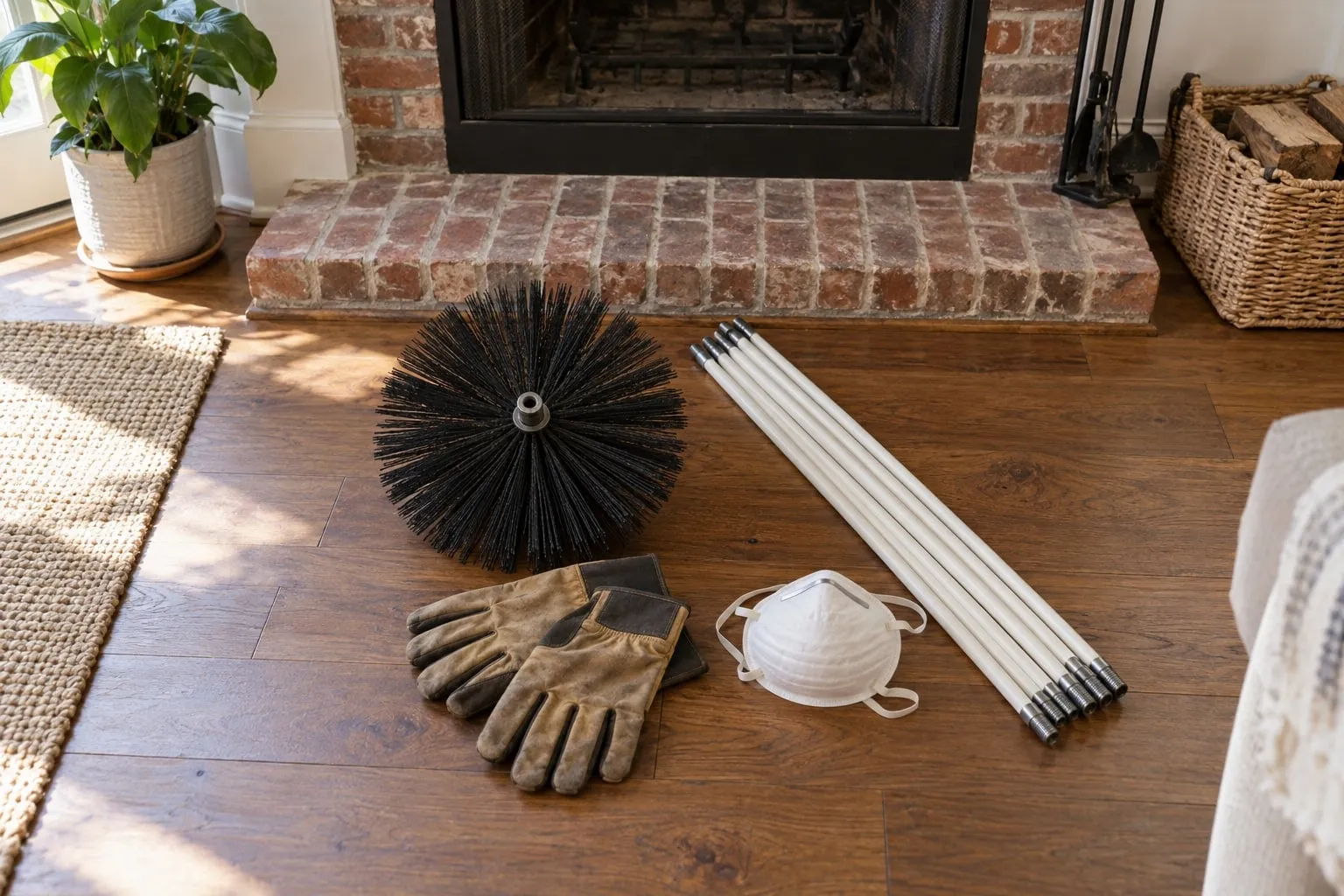
A round black chimney brush, a bundle of white fibreglass rods, leather work gloves and a dust mask on a wooden floor beside a brick hearth
  • Based in Winter GardenWest Orange County
  • A call backWe choose the day together
  • Request formAlways open

How a sweep goes, and why it matters.

What comes off the walls, how to judge when the next sweep is due, and what to settle before the first fire of the cold season.

  1. What the brushes lift.

    Burning wood coats the inside of a flue. New deposit is dry and powdery and brushes away easily; years of slow, smoky fires turn it into sticky tar and, in the end, a hard glassy glaze that ordinary bristles scarcely touch.

    Work begins at the damper and moves up to the cap. The ledge above the damper is cleared next and the floor of the firebox last, so everything dislodged leaves with us rather than sitting there to burn.

  2. Working out the next sweep.

    How you burn decides. Fires every evening build a coating much faster than a few fires on cold days, and a thick or glossy layer means the sweep is overdue.

    NFPA 211 suggests an inspection each year whatever the use. That inspection is what reveals the coating, which is why the two jobs often share one visit.

    Winters are mild enough that hearths here see short bursts of use. Orlando International Airport averages 1.6 nights a year at or below freezing, by its 1991 to 2020 normals, yet it reached 19 degrees on January 21, 1985. Even a seldom-used flue gathers soot, and a neglected one can fill with leaves and nests, so a yearly look is the best starting point.

  3. What a clean flue gives you.

    Built-up creosote can ignite in the flue, which is one way chimney fires start. With the deposit gone, a stray spark has little left to catch.

    Draw improves as well. Smoke ought to climb and leave, yet in a coated or partly blocked flue it can come back into the room the moment the damper opens.

  4. Stoves, inserts and gas log sets.

    Turn a stove down for the night and it smolders; smoldering smoke is the heaviest creosote maker, and most of it lands in the connector pipe joining stove to flue.

    The whole route of the smoke is cleaned: that connector and its joints, the flue or liner above, then the cap. Gas appliances are a separate matter. Florida's Fuel Gas code expects a flue that once carried solid-fuel smoke to be cleaned out before a gas appliance is attached (501.15.2) and the passage examined before an appliance is replaced (503.5.6), and the residential code bars an unvented gas log heater from a factory-built fireplace unless the unit is listed for one (R1004.4).

  5. At the cap: soot, birds and bats.

    Cooling smoke leaves soot on the mesh of the cap. The same mesh keeps sparks in, so a clogged one weakens the draw while defeating its own purpose; we clear it at every visit. Birds and bats take over Florida flues too. Federal law protects chimney swifts, and bat exclusions are illegal between mid-April and mid-August; until the season turns, an occupied flue is left alone.

  6. A smell when the air is damp and warm.

    Creosote is the likely cause. A flue that has been used keeps a trace of it, and when the air is heavy and wet, or the draft reverses, the smell drifts into the room. Once the sweep has taken away the source, a damper left shut between fires deals with anything that remains.

Book a sweep

Questions about sweeping.

Short answers, with a source where there is one.

When should the next sweep happen?

Judge by the thickness of the coating, not by the calendar. The annual inspection NFPA 211 advises reveals the amount and the type, and a glossy or tarry layer is a sign to schedule soon.

Sweep first, or inspection?

The inspection covers the full chimney across NFPA 211's three levels. Because soot may conceal damage, a single visit usually handles both.

What exactly is glazed creosote?

A coating that has hardened into a slick, dark shell, generally where smoke cools slowly, for instance in a stove banked for the night. Brushing barely marks it, so discovering some is a cue to book soon.

Do gas fireplaces need sweeping?

No creosote forms, but the vent must stay clear. The Chimney Safety Institute of America recommends an annual inspection of gas-fired chimneys as well, because debris or a bird's nest can obstruct the flue.

Why does the smell worsen when the air is humid?

Warm, damp air holds creosote odor, and a downdraft pushes it indoors. When the deposit has been removed, nothing remains to smell.

How do I arrange a sweep?

Ring (689) 303-3540. You can also write on the form further down this page, day or night, and someone will call you back to set a day.

What made you think of the chimney?

Describe it on the form or simply ring us. A person calls you back, and you settle on a day between you.

  1. 1Get in touch Ring the number or send the short form.
  2. 2A callback We phone you and fix a date together.
  3. 3Top to bottom Each of the six parts is examined in turn.
  4. 4Your choice We explain the findings and you decide on any work.

Phone

Ring and say what is needed.

(689) 303-3540

Request form

Open day and night

What do you need?

Which service?

About your fireplace

What does it burn?

Reaching you

Best time for the call back

Back

Cooler weather coming, or a storm that may have shaken something loose?