
Chimney inspections in Winter Garden.
Each part is examined on its own, which is how a small fault gets caught before it spreads. To ask for a visit, phone the office or send the form, whichever is easier for you.
- Based in Winter GardenWest Orange County
- A call backWe choose the day together
- Request formAlways open
What an inspection looks at.
Six parts, taken in order from the roofline to the hearth.
The cap at the roofline.
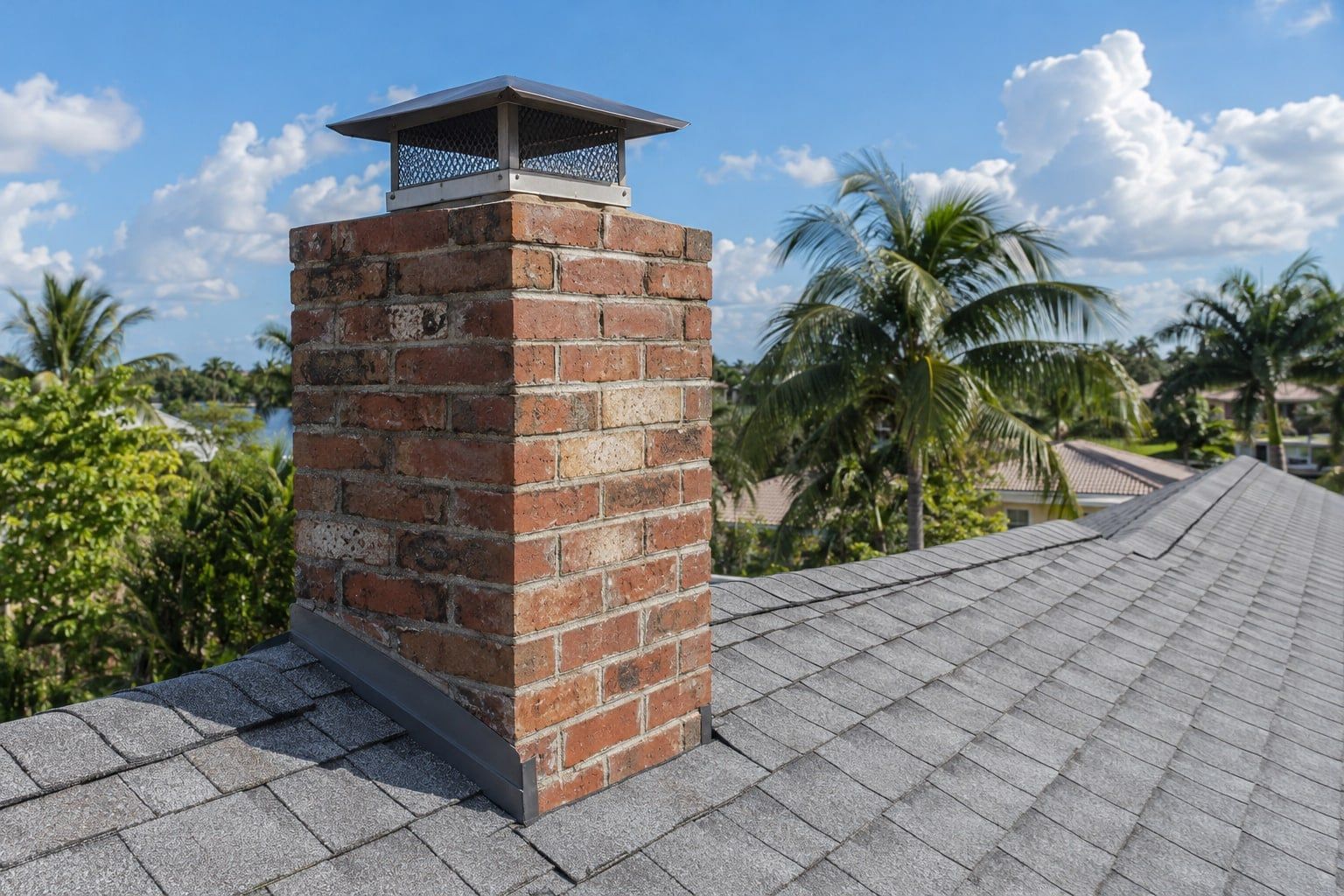
Hot sun, afternoon cloudbursts and gusts hit the cap before anything else on the stack. The lid turns the rain aside; under it, the mesh holds embers inside and keeps animals out.
Look forstorm dents, mesh coming loose, rusty fasteners holding the lid.
The crown beneath it.
In a downpour a hairline crack in the crown soaks up water and stays damp long after. Florida's code wants the top pitched to drain, with an overhanging drip edge and sealant at the flue liner (R1003.9.1).
Look forthin cracks, chipped edges, a slab pulling away from the flue tile, no drip edge fitted.
The flashing where roof meets stack.
Flashing, the metal collar at the roof, closes the seam between chimney and shingles or tile; any lifted edge is where wind-driven rain gets in. A broad chimney, more than 30 inches along the ridge and short of the ridgeline, should also have a cricket behind it (R1003.20).
Look forlifted edges, split sealant, rust streaks, a damp ceiling below, no cricket on a wide stack.
The flue liner inside the masonry.
Smoke and fumes leave the house by way of the liner, which Florida's code requires in masonry chimneys (R1003.11). A flue from the typical 2004 build year has been in service about twenty-two years, long enough for a tile to move or a seam to rust through.
Look foropen seams, broken or displaced tiles, a liner that does not fit its appliance.
The smoke chamber and damper over the firebox.
Deposits collect first on the ledge above the damper. A few fires a year fill it slowly, but it never stands empty.
Look forglossy or tarry buildup, a damper that will not close, a ledge that flakes or leans.
The firebox at the hearth.
The firebox walls take the heat of every fire, and over the years the firebrick crazes and the joints loosen. A narrow gap is a modest repair; heat that reaches the framing makes a bigger one.
Look forgaps between bricks, firebrick that flakes or cracks, a hearth that moves under your foot.
The three inspection levels.
NFPA 211, the standard for chimneys, fireplaces and vents, describes three levels of inspection, each reaching further than the one before.
Level 1
A chimney in routine use, with nothing altered recently.
Includes Whatever can be seen or reached as the chimney stands, with no parts removed.
Level 2
Buying, selling or inheriting a house; installing different heating equipment; a chimney fire; any event that may have harmed the system.
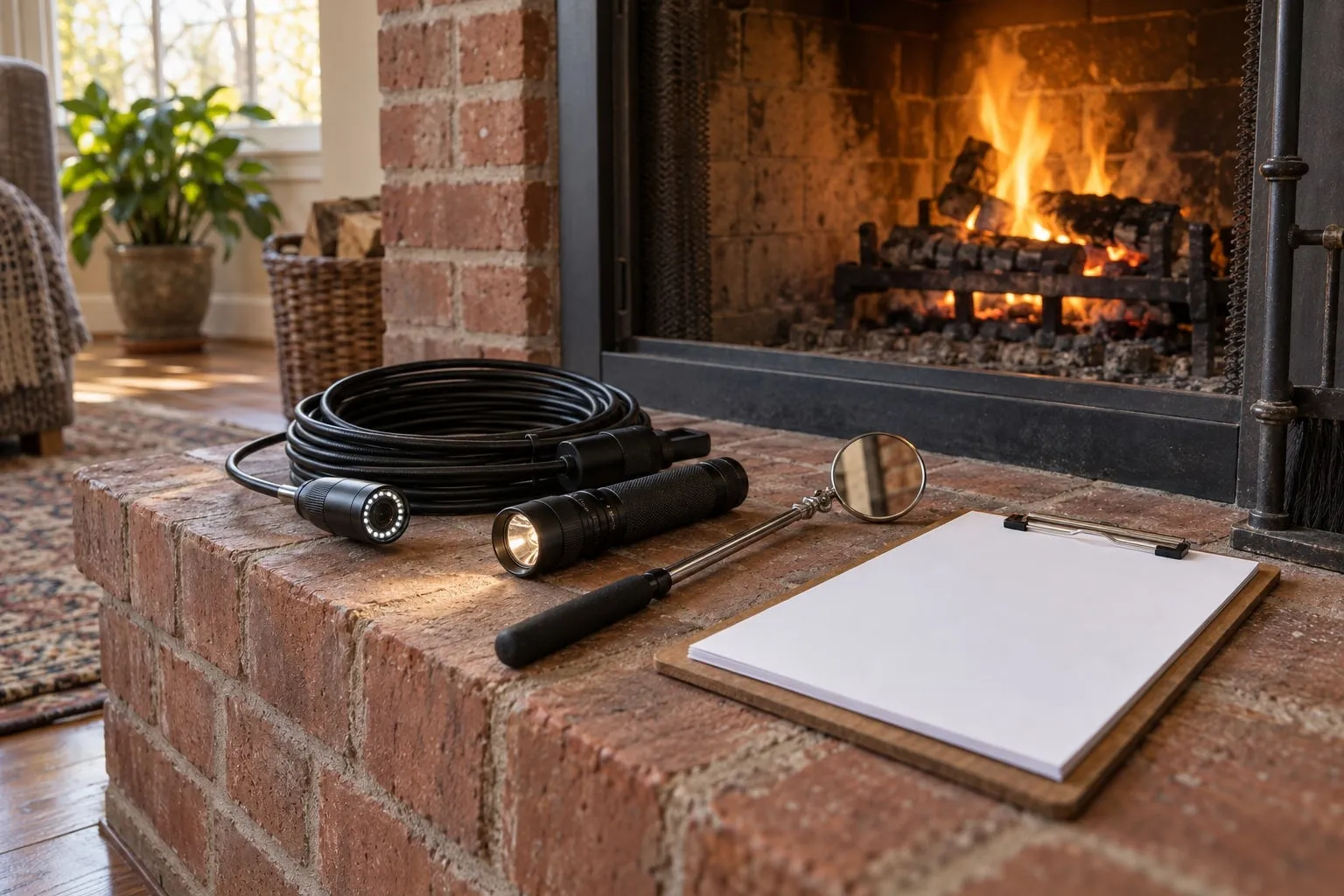
Includes Level 1 work, extended to the attic and crawl space, with a camera drawn through the flue.
Level 3
Level 2 has left a suspected hidden defect unresolved.
Includes Level 2 and, in addition, the concealed areas, opened up if required.
Source: the three inspection levels of NFPA 211, as described by the Chimney Safety Institute of America (CSIA).Book an inspection
Good moments to book an inspection.
A fault noticed only when it shows is noticed late. These are the occasions that make an inspection worth it.
Questions about inspections.
Short answers, with a source where there is one.
Is a yearly inspection mandatory?
NFPA 211 recommends one. Whether any rule makes it compulsory for your house is for local codes to say. Sweeping is governed by how much you burn instead.
Is it sensible to inspect when a house is bought or sold?
Yes. NFPA 211 ties a sale or transfer to Level 2, which brings in the attic, the crawl space and a camera inside the flue; Level 1 ends at whatever a hand can reach.
What does it cover?
Everything between the roofline and the hearth, in the order laid out above, starting with cap, crown and flashing and ending in the firebox.
How do I book?
Ring (689) 303-3540 or use the form below, open at any hour.

What made you think of the chimney?
Describe it on the form or simply ring us. A person calls you back, and you settle on a day between you.
- 1Get in touch Ring the number or send the short form.
- 2A callback We phone you and fix a date together.
- 3Top to bottom Each of the six parts is examined in turn.
- 4Your choice We explain the findings and you decide on any work.
Request form
Open day and night